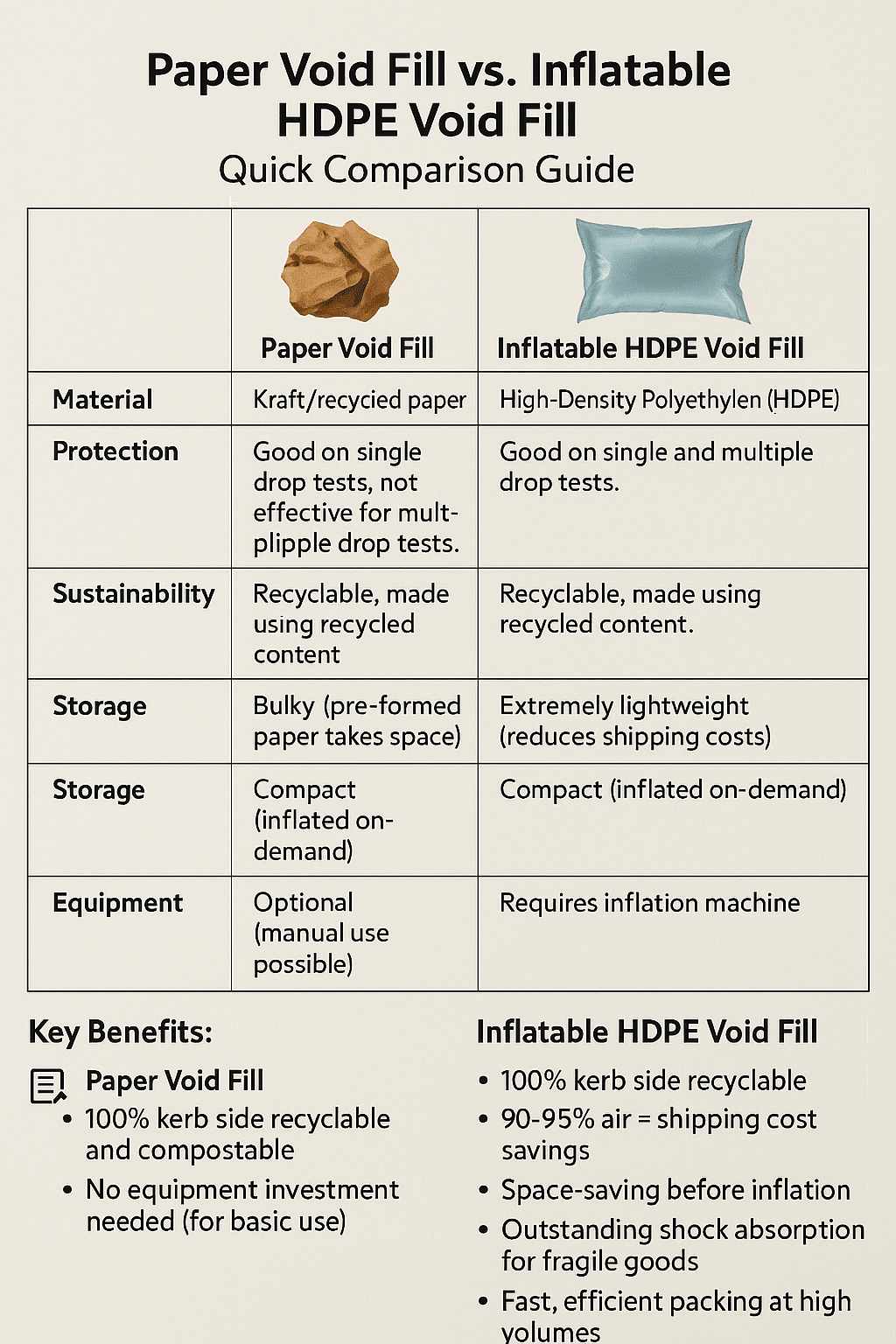
In the world of protective packaging, void fill plays a crucial role in ensuring products reach customers in perfect condition. Two of the most widely used materials for this purpose are paper void fill and inflatable HDPE void fill. Each offers distinct advantages depending on the application, sustainability goals, and shipping requirements. Below, we’ll compare the two solutions and highlight the key benefits of each.

Paper Void Fill Packaging involves crumpling or shaping paper to fill empty spaces within a shipping box, preventing product movement and absorbing shock.
Key Benefits of Paper Void Fill:
- Recyclable and Compostable: Paper is easily recyclable.
- Versatility: Paper can be moulded to fit around products of various shapes and sizes, providing cushioning, blocking, and bracing capabilities.
- No Equipment Needed (in Basic Forms): For small operations, hand-crumpled paper offers a low-cost solution without needing machines.
- Strength and Cushioning: High-quality kraft paper options offer protection for basic items.
Common Applications:
- Low value E-commerce orders

Inflatable HDPE Void Fill Packaging void fill uses small air-filled bags or cushions made from durable plastic film to protect items inside a box.
Key Benefits of Inflatable HDPE Void Fill:
- Ultra Lightweight: Inflatable packaging dramatically reduces overall package weight compared to paper, lowering shipping costs, especially important for air freight.
- Space-Saving: Before inflation, film rolls take up minimal storage space. This reduces warehouse footprint and inventory management costs.
- Efficient Production: Air cushion machines can produce void fill on-demand, at high speeds, which is ideal for fast-paced packing environments.
- Excellent Shock Absorption: Inflatable cushions provide superior shock protection for delicate and lightweight items.
- Durability and Strength: Despite being lightweight, HDPE cushions resist punctures and can maintain their protective qualities under pressure.
- Recyclable: HDPE film is recyclable and often made from recycled content, improving their environmental profile.
Common Applications:
- Electronics, cosmetics, and consumer goods
- High-volume fulfilment centres
- Businesses seeking to lower shipping costs
The graphic below summarises the advantages of both solutions.